Ottessa Moshfegh
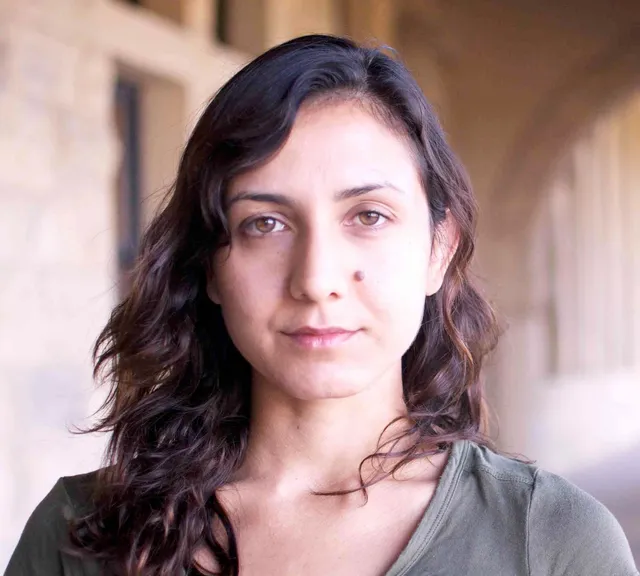
Ottessa Moshfegh has published 10 books across 4 series. The recommended reading order starts with SleepingFish 8 (2010).
Ottessa Moshfegh is an American novelist who writes dark, psychologically unsettling fiction about characters who live on the margins. Born in Boston in 1981 to musician parents, she grew up playing piano and clarinet before turning to words, earning her BA from Barnard College and an MFA from Brown University. After graduation she taught English in China, then returned to the States to begin writing.
She arrived as a fiction writer with Eileen, a debut novel that won the PEN/Hemingway Award and landed on the Booker Prize shortlist. The book announced a distinctive voice: spare, strange, and unflinching in its attention to isolated, obsessive, often unreliable narrators. Her novella McGlue and short story collection Homesick for Another World extended that darkly comic sensibility across different forms.
My Year of Rest and Relaxation and Death in Her Hands, her second and third novels, both became New York Times bestsellers and cemented her reputation for rendering inner lives with precision and unexpected humor. Readers drawn to literary fiction that refuses to comfort find her work irresistible. Moshfegh lives in Southern California and is married to writer Luke Goebel.
Shelf & Shadows
Order of Anthologies
- TagscrimemysteryDescriptionSleepingFish 8 represents a singular moment in the evolution of experimental literary publishing, a journal that refuses the comfortable boundaries between poetry, prose, and visual art. The issue unfolds as a series of atmospheric provocations, each piece contributing to a mood of deliberate unease and formal restlessness. Ottessa Moshfegh's presence here signals the journal's commitment to voices that disturb as much as they enchant, writers who understand that discomfort can be a form of intimacy. The pages carry a particular weight, a sense of language pushed to its edges, where meaning becomes slippery and the familiar turns strange. What distinguishes this anthology is its refusal to coddle or explain, its willingness to let readers navigate without guardrails through territories of fragmented narrative and linguistic experimentation. The work here doesn't ask to be liked so much as encountered, each contribution a small rupture in the expected flow of reading. This is literature as investigation rather than entertainment, though there's a dark pleasure in its challenges. SleepingFish 8 gathers writers and artists who share an aesthetic of precision married to wildness, control exercised in service of the uncontrolled. For those drawn to the margins where conventional storytelling breaks down and something more urgent emerges, this issue offers a map to territories most publishers fear to chart.Publication dateJanuary 1, 2010Amazon rating5/5Print length118LanguageEnglishPublisherCalamari Press
- Tagsliterary-fictionDescriptionOttessa Moshfegh curates a collection that refuses easy comfort. The stories here don't soothe. They unsettle. Drawn from Joyland Magazine's archives, these selections bear the editor's unmistakable eye for the strange, the abject, the quietly devastating moments that crack open ordinary lives. Each piece operates like a small detonation. Characters drift through their days until something shifts—a gesture, a memory, a sudden recognition of what they've become. The prose is clean and unflinching. No sentimentality. No redemption arcs. Just the raw texture of human experience rendered with surgical precision. Moshfegh has assembled voices that share her commitment to truth over likability, to discomfort over resolution. This is fiction for readers who want literature to do more than entertain. It provokes. It lingers. The anthology format suits this approach perfectly—each story a concentrated dose of unease, a reminder that the most interesting writing often lives in the margins, in the small presses and literary magazines where writers can take real risks. Retro 4 captures that spirit. It's a document of contemporary fiction at its most fearless, curated by a writer who understands that sometimes the best stories are the ones that refuse to let you look away.Publication dateJune 1, 2014Amazon rating2.2/5Print length122LanguageEnglishPublisherLulu.com
- DescriptionThis issue of Granta gathers twenty of the most exciting voices in contemporary American fiction, writers under forty who are reshaping what the novel can do. Ottessa Moshfegh is among them, alongside a cohort of storytellers who refuse easy categorization—some experimental, some deeply traditional, all urgent and necessary. The anthology offers excerpts and stories that reveal writers mid-leap, catching them at the moment when promise hardens into achievement. What makes this collection essential isn't just the names—though you'll find authors who've since become fixtures on prize lists and syllabi—but the snapshot it provides of a generation grappling with America's fractures and possibilities. These are writers attuned to violence and tenderness in equal measure, to the strangeness lurking in ordinary lives, to language as both weapon and salve. Reading through these pages feels like eavesdropping on twenty different arguments about what fiction owes us now. Some pieces will unsettle you. Others will feel like coming home. All of them demand your attention, and none of them sound like anyone else. This is American fiction at a hinge moment, raw and restless and unafraid.Publication dateApril 27, 2017Amazon rating4.5/5Print length256LanguageEnglishPublisherGranta Magazine


Order of Short Stories/Novellas
- Tagsshort-storiesDescriptionThe world tilts slightly off-axis in Ottessa Moshfegh's hands. Here, self-improvement becomes a grotesque mirror. The title promises uplift. The pages deliver something darker, stranger, more true. Moshfegh writes characters who want to be better but can't quite manage it. They diet and fail. They resolve and relapse. They perform virtue while nursing private rot. Her prose is clinical, unflinching, almost cruel in its precision. She observes human weakness the way an entomologist pins butterflies—with detachment and fascination. The humor is bone-dry. The discomfort is real. This is fiction for readers who distrust easy answers. Moshfegh refuses to redeem her protagonists or offer tidy moral lessons. Instead, she gives us the messy truth of people trapped between who they are and who they wish to be. The gap between aspiration and reality becomes a kind of abyss. You'll recognize yourself in these pages, even when you'd rather not. That's the point. That's the gift. Moshfegh doesn't flatter. She doesn't console. She shows us our own faces, unflattering light and all, and trusts us to look.Publication dateMay 13, 2013Amazon rating4/5Print length22LanguageEnglishPublisherElectric Literature
- Tagsliterary-fictionshort-storiesmysterycrimesuspensehistorical-fictionDescriptionWhat does a man owe to the truth when his own mind is a fog, when memory itself feels like drowning? Ottessa Moshfegh's *McGlue* plunges us into the fractured consciousness of a nineteenth-century sailor accused of murder, a man so pickled in alcohol and grief that he can barely piece together what happened—or whether he's guilty at all. McGlue wakes in a ship's hold, shackled and sick, waiting to stand trial for killing his best friend. But the real prison isn't the chains—it's his own unreliable mind, a swamp of blackouts and half-remembered violence. Moshfegh writes him with unflinching intimacy, tracing the jagged edges of his confusion, his self-loathing, his desperate need to remember or forget. This is a novella that reads like a fever dream, all salt and bile and disorientation. Moshfegh's prose is visceral and strange, capturing the queasy rhythm of a life lived at the bottom of a bottle. McGlue is no hero—he's wretched, pathetic, and yet somehow heartbreaking in his lostness. Short, brutal, and utterly absorbing, *McGlue* is Moshfegh at her most daring. It's a story about guilt and oblivion, about the stories we tell ourselves when the truth is too terrible to face. You won't forget McGlue, even if he can't remember himself.Publication dateNovember 4, 2014Amazon rating3.9/5Print length144LanguageEnglishPublisherFence Books


Order of Short Story Collections
- Tagsliterary-fictionshort-storiesmysterysuspensethrillerDescriptionThe flesh is weak here. The timber is crooked. Ottessa Moshfegh's characters stumble through their days with cruelty, stupidity, and a casual capacity for harm. They are not likable. They are not trying to be. These stories strip away the veneer we use to make ourselves palatable, leaving only the raw, uncomfortable truth of what people actually do to each other. Moshfegh works like a forensic examiner. She shows you the ugly thing—the petty betrayal, the self-deception, the small violence—and holds it under the light until you stop flinching. Until you recognize something. The discomfort is the point. She refuses to look away, and so you can't either. Each story is a controlled experiment in human weakness, rendered with surgical precision. But beauty emerges from strange sources in this collection. Not redemption, exactly. Not comfort. Something sharper and more honest. Moshfegh understands that we are all complicit in our own grotesqueries, that the line between observer and observed is thinner than we'd like to admit. By the time you finish, you realize you've been looking at yourself all along. The mirror she holds up is unforgiving, but it's also strangely clarifying. This is fiction that refuses to flatter, and that refusal is its own kind of gift.Publication dateJanuary 17, 2017Amazon rating4.2/5Print length304LanguageEnglishPublisherPenguin Press

Order of Standalone Novels
- Tagsliterary-fictionmysterycrimethrillersuspenseDescriptionWhat happens when the monotony of a life lived in quiet desperation is suddenly interrupted by the promise of something—anything—else? Ottessa Moshfegh's Eileen is a psychological portrait of a young woman trapped in the suffocating routines of a small Massachusetts town in the 1960s, where she works at a boys' prison and cares for her alcoholic father, all while nursing dark fantasies that simmer beneath her unremarkable exterior. Eileen Dunlop is not a likable protagonist, and that's precisely the point—she's bitter, obsessive, and consumed by her own body and the bodies of others, existing in a fog of self-loathing and morbid curiosity. Her days blur together in a haze of laxatives, stolen glances, and elaborate escape fantasies until the arrival of Rebecca, a glamorous new counselor at the prison, who seems to offer a glimpse of the life Eileen has been starving for. What begins as an intense, unsettling friendship spirals toward a shocking act that will change everything, though Moshfegh keeps her cards close, letting dread accumulate in the margins of every page. The novel is less concerned with plot than with atmosphere, with the claustrophobic interiority of a woman on the edge of something she can't yet name. Moshfegh writes with a cold, unflinching eye, crafting a character study that is as darkly funny as it is disturbing, a slow-burn descent into the stranger corners of human longing.Publication dateAugust 16, 2016Amazon rating3.7/5Print length272LanguageEnglishPublisherPenguin Books
- Tagsliterary-fictionmysterysuspensethrillerDescriptionThere is a particular kind of numbness that settles over a life when all the usual tethers have been severed, and in the early months of the new millennium, an unnamed young woman on Manhattan's Upper East Side decides to surrender to it completely. Her parents are dead, her connections to the living world reduced to a handful of toxic relationships that offer neither comfort nor meaning, and so she embarks on a year-long experiment in pharmaceutical oblivion, determined to sleep her way into some kind of transformation. What begins as a controlled retreat quickly spirals into something far more precarious. Her psychiatrist is reckless, dispensing prescriptions with little regard for consequence, and the medications she consumes in increasing quantities bring not peace but dangerous blackouts that erase hours and days from her memory. Her bulimic best friend Reva circles at the edges of her consciousness, as does an ex-boyfriend, but these relationships are as hollow as everything else she's trying to escape. The isolation deepens, the pills multiply, and the line between sleep and waking blurs into something unrecognizable. Moshfegh crafts a portrait of self-erasure that is both darkly comic and profoundly unsettling, tracing the contours of a young woman's attempt to opt out of existence without actually dying. It's a novel about what happens when you decide the world's travails are simply too much to bear, and whether oblivion might be the only honest response.Publication dateJuly 10, 2018Amazon rating4/5Print length304LanguageEnglishPublisherPenguin Press
- Tagsliterary-fictionmysterycrimesuspensehorrorthrillerDescriptionThis is a novel that refuses to behave, and that's exactly what makes it brilliant. Ottessa Moshfegh hands us a mystery that unravels not into answers, but into the strange, untrustworthy mind of the woman trying to solve it. Vesta Gul is a widow living alone in the woods with her dog when she discovers a note on the ground during her morning walk: "Her name was Magda. Nobody will ever know who killed her. It wasn't me. Here is her dead body." There's no body, no evidence, nothing but those words. But Vesta can't let it go. What follows isn't a conventional thriller—it's a psychological spiral. Vesta begins constructing an entire narrative around Magda: who she was, how she died, who might have killed her. She becomes obsessed, inventing details, chasing shadows, losing herself in a story that may not even be real. The deeper she goes, the more we question everything: the note, the mystery, Vesta herself. Moshfegh writes with her signature unsettling precision, turning what could be a simple whodunit into something far stranger and more disquieting. This is a book about loneliness, delusion, and the stories we tell ourselves to fill the void. It's eerie, darkly funny, and impossible to shake.Publication dateJune 23, 2020Amazon rating3.5/5Print length272LanguageEnglishPublisherPenguin Press
- Tagsliterary-fictionfantasyhistorical-fictionmysterycrimesuspenseDescriptionThe world is rotting from the inside out, and nowhere is that more evident than in Lapvona, a medieval fiefdom where cruelty is currency and survival is a daily negotiation with depravity. Ottessa Moshfegh plunges us into this bleak landscape with the unflinching eye that has made her one of contemporary fiction's most provocative voices, crafting a fable so dark it feels like a fever dream you can't shake. At the center of this nightmare stands a thirteen-year-old shepherd's son navigating one fateful year under the rule of a lord so corrupt, incompetent, and feckless that his failures cascade down through every layer of society. Moshfegh doesn't flinch from the grotesque—this is a world of famine, violence, and bodies pushed to their limits—but she also finds something darkly hypnotic in the wreckage. Her prose is spare and brutal, yet somehow lush in its attention to the physical and the profane. This isn't historical fiction as comfort or escape; it's a mirror held up to power, faith, and the lies we tell ourselves to endure. What sets Lapvona apart is Moshfegh's refusal to offer easy answers or redemption. She gives us medieval squalor as allegory, a parable about complicity and corruption that feels unnervingly contemporary. It's unsettling, visceral, and utterly her own—a book that lingers like a stain.Publication dateJune 21, 2022Amazon rating3.9/5Print length320LanguageEnglishPublisherPenguin Press


Frequently Asked Questions about Ottessa Moshfegh
Ottessa Moshfegh's books do not need to be read in any specific order, as her novels and short story collections are all standalone works. If you are interested in exploring her writing chronologically, you can start with her novella McGlue, published in 2014, followed by her short story collection Homesick for Another World in 2017. Her novels include Eileen (2016), My Year of Rest and Relaxation (2018), Death in Her Hands (2020), and Lapvona (2022). Reading them as they were published offers a look at her development as a writer.
A good starting point for Ottessa Moshfegh's work is her short story collection Homesick for Another World, published in 2017. It offers a range of her characteristic explorations of alienation and discomfort. Alternatively, her 2016 novel Eileen introduces the kind of unsettling narrative and peculiar characters that have come to define her longer fiction. Both works provide a clear entry into her distinct literary style.
No, you do not have to read Ottessa Moshfegh's books in any particular order. Her novels and short story collections are all distinct and can be read independently. Each book presents a self-contained narrative. Readers can choose to start with any of her published works based on their preference for novel length or the themes that appeal to them most.
Ottessa Moshfegh primarily writes standalone novels and short story collections. She has published four standalone novels: Eileen, My Year of Rest and Relaxation, Death in Her Hands, and Lapvona. She has also published one collection of short stories, Homesick for Another World, and a novella titled McGlue. None of these works are part of a series.
Ottessa Moshfegh has written four standalone novels, one short story collection, and one novella. Her novels include Eileen, My Year of Rest and Relaxation, Death in Her Hands, and Lapvona. Her short story collection is Homesick for Another World, and her novella is McGlue. She has also had stories and excerpts included in various anthologies.
The first book published by Ottessa Moshfegh was the novella McGlue, released in 2014. This was followed by her first novel, Eileen, in 2016. Her short story collection, Homesick for Another World, was published in 2017.
Ottessa Moshfegh's most recent book is Lapvona, published in 2022. This novel is set in the medieval period and explores themes of faith, power, and violence.
Ottessa Moshfegh writes literary fiction, often characterized by dark humor, psychological depth, and unsettling characters. Her work frequently explores themes of alienation, obsession, and the grotesque. While her novels are distinct, they often share a tone and a focus on characters grappling with their own internal states and external circumstances.








We verified the reading order for Ottessa Moshfegh's books by cross-referencing official publication dates, ISBN databases, and publisher catalogs.
Last verified: April 2026
Shelf & Shadows. (…). “Ottessa Moshfegh Books in Order.” Retrieved …, from https://www.shelfandshadows.com/authors/ottessa-moshfegh