Forrest Carter
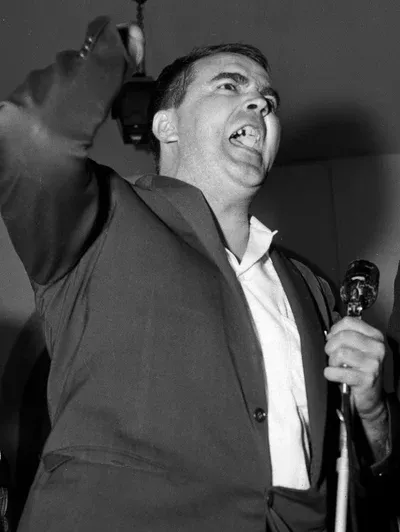
Forrest Carter has published 4 books across 3 series. The recommended reading order starts with The Education of Little Tree (1976).
Forrest Carter is the pen name of American author Asa Earl Carter, who wrote Westerns and presented himself as Cherokee before The New York Times revealed he was a Southern Klansman and political speechwriter. Born in 1925 and living until 1979, he used the pseudonym to reinvent himself entirely, crafting frontier tales that drew readers into worlds of outlaw mythology and violence.
Carter became a published novelist in 1975 with Gone to Texas, later retitled The Rebel Outlaw: Josey Wales. The book follows a Confederate guerrilla shaped by loss and revenge, a man on the run through a brutal frontier landscape. The novel became a cultural phenomenon when Clint Eastwood adapted it into a defining Western film, cementing its place in American pop culture despite the controversy surrounding its author.
The exposure of Carter's true identity raised lasting questions about authenticity and the separation of art from artist. His personal history as a Klansman casts a long shadow over his literary success, complicating the legacy of work that readers found undeniably compelling. The Rebel Outlaw: Josey Wales remains a landmark of the genre, its raw storytelling and cinematic adaptation ensuring its endurance even as Carter's life story troubles it.
Shelf & Shadows
Order of Josey Wales Books
- TagshorrorDescriptionWhat does a man become when vengeance is the only language left to speak? Forrest Carter's sequel to his iconic Western follows Josey Wales deeper into the brutal terrain of post-Civil War America, where survival and retribution are indistinguishable. This is not a story of redemption—it is a reckoning. Wales rides south into Mexico, pursued by bounty hunters and haunted by the ghosts of a war that refuses to end. The trail is unforgiving, marked by violence and the raw code of the frontier. Carter writes with a stark, unflinching eye, rendering landscapes as merciless as the men who traverse them. His prose is lean, his action visceral, and his protagonist remains one of the most compelling antiheroes in Western fiction—a man shaped by loss, driven by loyalty, and defined by an unyielding will to protect those few he allows into his orbit. This is a novel that understands the mythology of the American West while interrogating its costs. Carter does not romanticize; he excavates. The result is a work that feels both timeless and unsettling, a meditation on justice, identity, and what remains when everything else has been stripped away. For readers who seek Westerns with weight and consequence, this is essential terrain.Publication date1989
- Tagshistorical-fictionDescriptionThere's a particular kind of loneliness that comes from losing everything you love to violence, and Josey Wales knows it bone-deep. A peaceful Missouri farmer turned relentless outlaw after Union guerrillas slaughter his family during the Civil War, Josey becomes a Confederate bushwhacker driven by grief and rage, refusing to surrender when the war ends and finding himself hunted by the very government that destroyed his life. What follows is a raw, unforgiving journey through the post-war frontier, where Josey gathers a ragtag band of fellow outcasts—Cherokee warriors, a young rebel, an elderly woman—all of them searching for something resembling home in a land that's forgotten mercy. Forrest Carter writes with a spare, mythic quality that feels less like historical fiction and more like frontier legend passed down through firelight, capturing both the brutality of survival and the unexpected grace that can emerge from it. This is a Western stripped of romanticism but not of humanity, where violence is swift and consequences linger, and where loyalty becomes the only law that matters when civilization itself has proven hollow. Josey Wales isn't just running from his past—he's carving out a code to live by in a world that's lost its moral compass, and Carter makes you feel every hard-won mile of that journey.Publication dateJanuary 1, 2010Amazon rating4.8/5Print length228LanguageEnglishPublisherLeisure Books


Order of Non-Fiction Books
- Tagsnon-fictionbiographymemoirhistorical-fictionDescriptionWhat does it mean to truly belong to a place, to learn its rhythms and secrets until they become part of you? Forrest Carter's *The Education of Little Tree* unfolds in the Appalachian mountains, where a young Cherokee boy is raised by his grandparents after losing his parents. The world here is rendered in quiet, reverent detail—the forest teaches as much as any schoolroom, and survival means understanding the language of seasons, animals, and the land itself. There's a gentleness to the prose, a sense of time moving differently when measured in moonrises and the first frost. Little Tree's education isn't found in books alone. His grandfathers pass down Cherokee wisdom, stories that root him in a culture and a way of seeing that refuses to be erased. The bond between the boy and his grandparents is tender, built on shared silences and small rituals that accumulate into something profound. This is a moving portrait of childhood shaped by love and loss, of indigenous knowledge preserved against the current of a changing world. Carter writes with an aching simplicity, capturing both the beauty of a vanishing way of life and the resilience required to honor it. It's a book that asks you to slow down, to listen—and in doing so, it stays with you long after the final page.Publication date1976

Order of Standalone Novels
- Tagshistorical-fictionDescriptionGeronimo's name alone conjures the American Southwest in all its brutal beauty—the Apache warrior who refused to surrender, who became legend even as his world was being systematically destroyed. Forrest Carter takes us into the heart of that world, tracing the life of a man who watched his people hunted, his family slaughtered, his sacred lands stolen piece by piece by an expanding nation that saw his existence as an obstacle to progress. This is not the sanitized history of textbooks but something rawer, told with the rhythm of oral tradition and the weight of lived grief. Carter writes with an intimacy that makes you feel the desert heat, the tension before a raid, the impossible choices between survival and surrender. The prose moves like the Apache themselves—swift, deliberate, attuned to landscape and loss. What emerges is not just a biography but a meditation on resistance, on what it costs to remain free when the entire machinery of conquest is arrayed against you. Geronimo becomes more than a historical figure here; he's a man caught between worlds, fighting not just for territory but for the right of his people to exist on their own terms. It's a story that refuses easy answers, that honors both the ferocity and the humanity of a life lived in defiance.Publication date1976

Frequently Asked Questions about Forrest Carter
Forrest Carter's books do not require a specific reading order, as they are largely standalone narratives. However, if you wish to follow a chronological path through the Josey Wales stories, The Vengeance Trail of Josey Wales, published in 1989, precedes The Outlaw Josey Wales / Gone To Texas, which was released in 2010. The Education of Little Tree, published in 1976, and Watch for Me on the Mountain, also from 1976, can be read independently and at any point. These works explore themes of nature, identity, and survival, often through the lens of Native American culture and experiences. Reading them in publication order offers one way to engage with Carter's varied output.
A good starting point for Forrest Carter is The Education of Little Tree, published in 1976. This book, a semi-autobiographical novel, introduces readers to the author's distinctive voice and his exploration of Cherokee traditions and philosophies. It details the life of a young orphan raised by his full-blooded Cherokee grandfather and grandmother in the mountains of Tennessee. The narrative focuses on nature, self-reliance, and the wisdom passed down through generations. Alternatively, Watch for Me on the Mountain, also published in 1976, offers a compelling adventure story and is another accessible entry point into Carter's work.
No, you do not have to read Forrest Carter's books in a specific order. While there is a series centered around the character Josey Wales, the books within that series are not strictly dependent on each other for understanding. The Vengeance Trail of Josey Wales and The Outlaw Josey Wales / Gone To Texas are the titles associated with this character. Beyond these, The Education of Little Tree and Watch for Me on the Mountain are considered standalone novels. Each book offers a complete narrative that can be enjoyed without prior knowledge of the others. Readers can choose any title that appeals to them.
Forrest Carter writes both standalone novels and books that are part of a series. The Order of Josey Wales Books includes The Vengeance Trail of Josey Wales and The Outlaw Josey Wales / Gone To Texas. These are connected by the character of Josey Wales. In addition to these, Carter also wrote standalone novels such as The Education of Little Tree and Watch for Me on the Mountain. These individual works are not part of any larger narrative arc and can be read independently. This variety allows readers to choose between immersive series experiences or self-contained stories.
Forrest Carter has written a total of four books that are commonly listed. These include two books in the Order of Josey Wales Books: The Vengeance Trail of Josey Wales and The Outlaw Josey Wales / Gone To Texas. He also authored two standalone novels: The Education of Little Tree and Watch for Me on the Mountain. These four titles represent the entirety of his published work that is widely available. Each book offers a distinct narrative, though themes of nature, survival, and cultural identity are recurring elements throughout his writing.
The first book written by Forrest Carter is generally considered to be The Education of Little Tree, published in 1976. This novel, which draws heavily on autobiographical elements, explores the life of a young boy raised by his Cherokee grandparents in the Appalachian Mountains. It delves into themes of nature, spirituality, and the wisdom of indigenous cultures. The publication year of 1976 also saw the release of Watch for Me on the Mountain, another standalone novel by Carter. However, The Education of Little Tree is often cited as the debut work that introduced readers to his unique storytelling.
Forrest Carter's most recent book is The Outlaw Josey Wales / Gone To Texas, published in 2010. This title is part of the Order of Josey Wales Books. It follows the character Josey Wales, known from other works. While The Vengeance Trail of Josey Wales was published earlier in 1989, the 2010 release is the latest in his bibliography. The other books by Carter, The Education of Little Tree and Watch for Me on the Mountain, were both published in 1976. There are no indications of any upcoming or new publications from Forrest Carter.
Forrest Carter primarily writes novels that explore themes of nature, survival, identity, and the wisdom found in indigenous cultures, particularly Cherokee traditions. His works often feature protagonists who are outsiders or survivors navigating challenging environments. The genres he touches upon include Western fiction, adventure, and semi-autobiographical narratives. The Josey Wales books lean into the Western and adventure aspects, focusing on a fugitive's journey. The Education of Little Tree is a notable example of his ability to blend memoiristic elements with a deep appreciation for traditional ways of life and the natural world.



R.J. Palacio
Coming soon
Kaki Warner
Coming soon

Kari Lynn Dell
Coming soon
Sasha Burke
Coming soon

We verified the reading order for Forrest Carter's books by cross-referencing official publication dates, ISBN databases, and publisher catalogs.
Last verified: April 2026
Shelf & Shadows. (…). “Forrest Carter Books in Order.” Retrieved …, from https://www.shelfandshadows.com/authors/forrest-carter